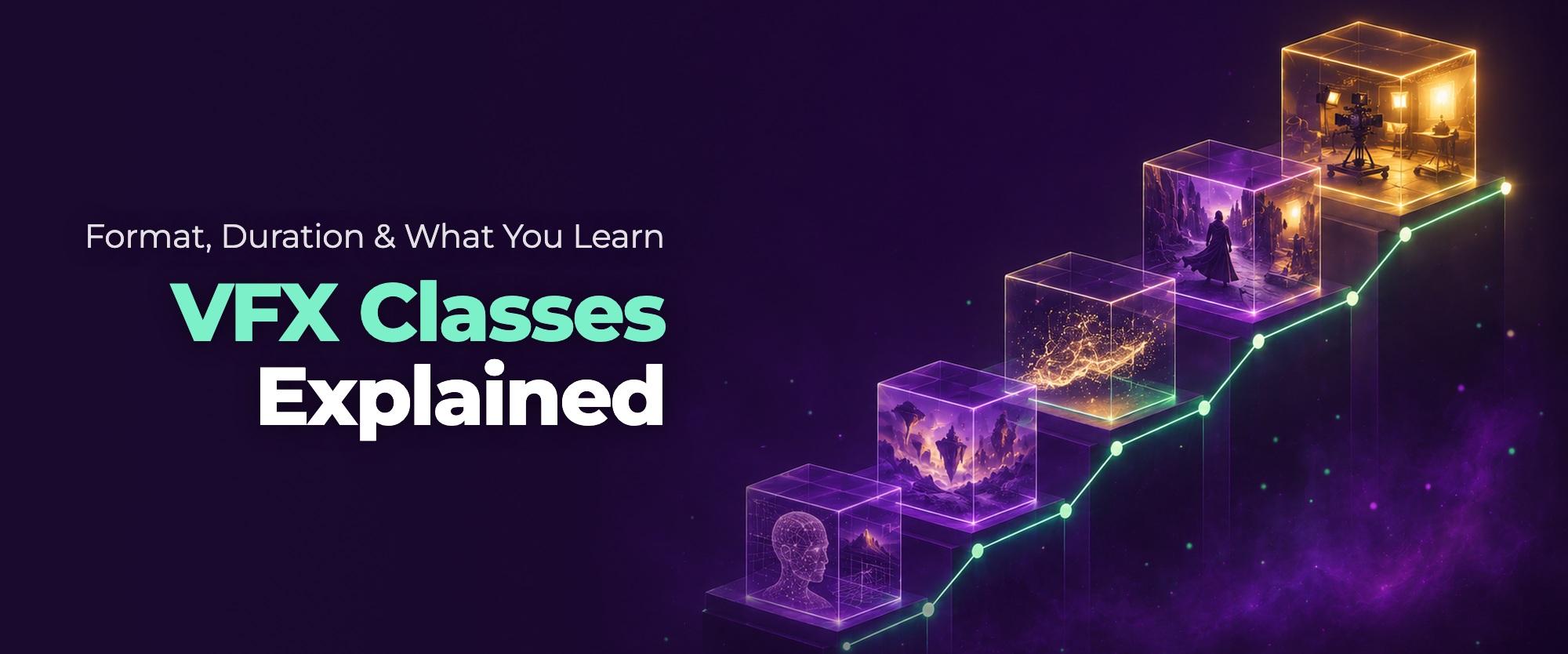
VFX Classes Explained: Format, Duration & What You’ll Learn
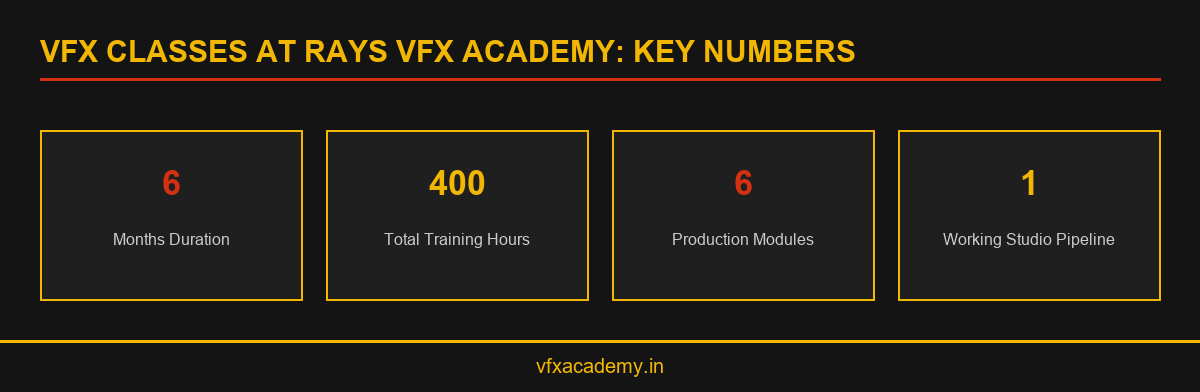
"VFX classes" is a broad search, covering everything from single-tool workshops to full production courses. Before comparing options, it helps to know exactly what format, duration and week-to-week structure you’re actually evaluating. Here’s how Rays VFX Academy’s 6-month, 400-hour VFX course is structured, so you know what to compare it against.
Key Takeaways
- VFX classes vary hugely in format; always confirm total hours, module count and batch structure before comparing fees.
- Rays VFX Academy runs a 6-month, 400-hour course across six sequential production modules.
- Classes combine instructor-led sessions with hands-on studio practice inside the Rays3D pipeline.
What "VFX Classes" Can Mean, and Why That Matters
Some VFX classes are single-tool workshops lasting a few weeks, useful for adding one specific skill. Others are full structured courses covering an entire pipeline over several months. Neither is inherently better; they answer different needs. The mistake is comparing fees across the two without first confirming which type of class you’re actually looking at. Our guide on VFX diploma vs. VFX certificate covers this same distinction in more depth from a credentialing angle.
How Rays VFX Academy’s Classes Are Structured Week to Week
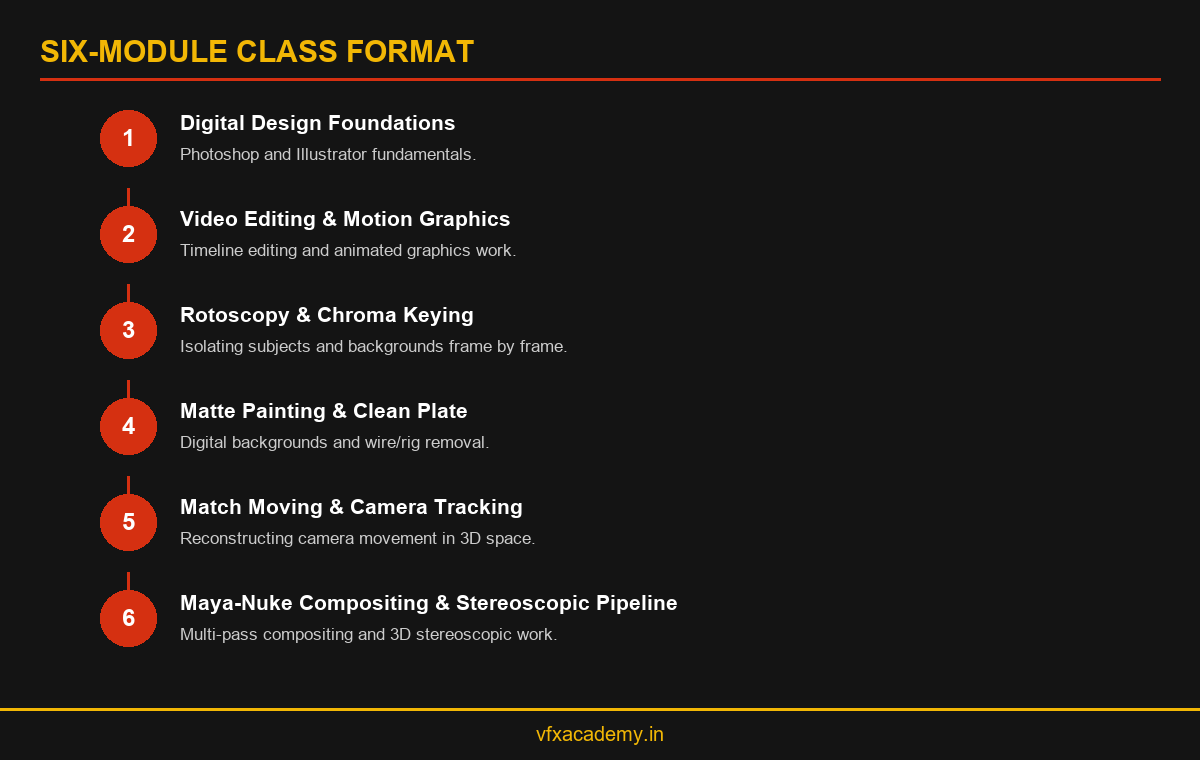
Classes combine instructor-led sessions covering theory and technique with hands-on studio time applying that technique to real production-style footage. Early weeks focus on digital design foundations and video editing basics. As the course progresses, class time shifts toward rotoscopy, chroma keying and matte painting, then match moving and camera tracking, before moving into the compositing modules that close out the course.
This progression matters for pacing expectations. Students often assume VFX classes jump straight into compositing, since that’s the most visible, exciting part of the pipeline. In practice, compositing is the culmination of everything taught earlier, tracking data, clean mattes, paint work, not a starting point.
The Six Modules, Module by Module
What to Ask Before Enrolling in Any VFX Classes
Confirm the total instructional hours, not just the number of weeks, since class frequency varies between institutes. Ask how much of that time is hands-on studio practice versus lecture. And ask whether class sizes are disclosed upfront, since smaller batches generally mean more individual feedback. Our guide on how to choose a VFX training institute in Kochi walks through the complete list of questions worth asking, and a free demo class booked through WhatsApp is the fastest way to see the format in person before committing.
It’s also worth asking what happens if you miss a class or fall behind. A structured, module-based format like Rays VFX Academy’s makes it easier to identify exactly which stage of the pipeline you need to revisit, rather than losing track of loosely organised individual sessions.
Conclusion
VFX classes range from short single-tool workshops to full 6-month production courses, and knowing which one you’re comparing changes everything about the decision. Rays VFX Academy’s 400-hour, six-module format is built for students who want the complete pipeline, not a fragment of it. See the full breakdown in our VFX course in Kochi guide, or book a free demo class to experience the format directly.
Frequently Asked Questions
How long are VFX classes at Rays VFX Academy?
The full course runs 6 months across 400 hours, structured into six sequential production modules.
Are VFX classes taught online or in person?
Rays VFX Academy’s course runs in person inside its Kochi campus, connected to the Rays3D production studio, combining instructor-led sessions with hands-on studio practice.
What is covered in the first module of VFX classes?
The course opens with digital design foundations, Photoshop and Illustrator, before progressing into video editing, motion graphics and VFX-specific modules.
Can I attend a demo class before enrolling?
Yes. A free demo class can be booked through WhatsApp or email, letting you see the class format and studio environment before committing.
How many hours per week do VFX classes typically require?
This varies by batch schedule. Confirm current batch timings directly with the academy, since total hours across 6 months determine weekly commitment.
Do VFX classes include compositing software training?
Yes. The later modules cover Maya-Nuke integration, multi-pass compositing and the stereoscopic pipeline as part of the full course.
Tag:vfx classes, vfx training

You may also like
Diploma in 3D Animation: Full Curriculum Breakdown

3D Animation Design: Skills, Software, and Tools You’ll Master