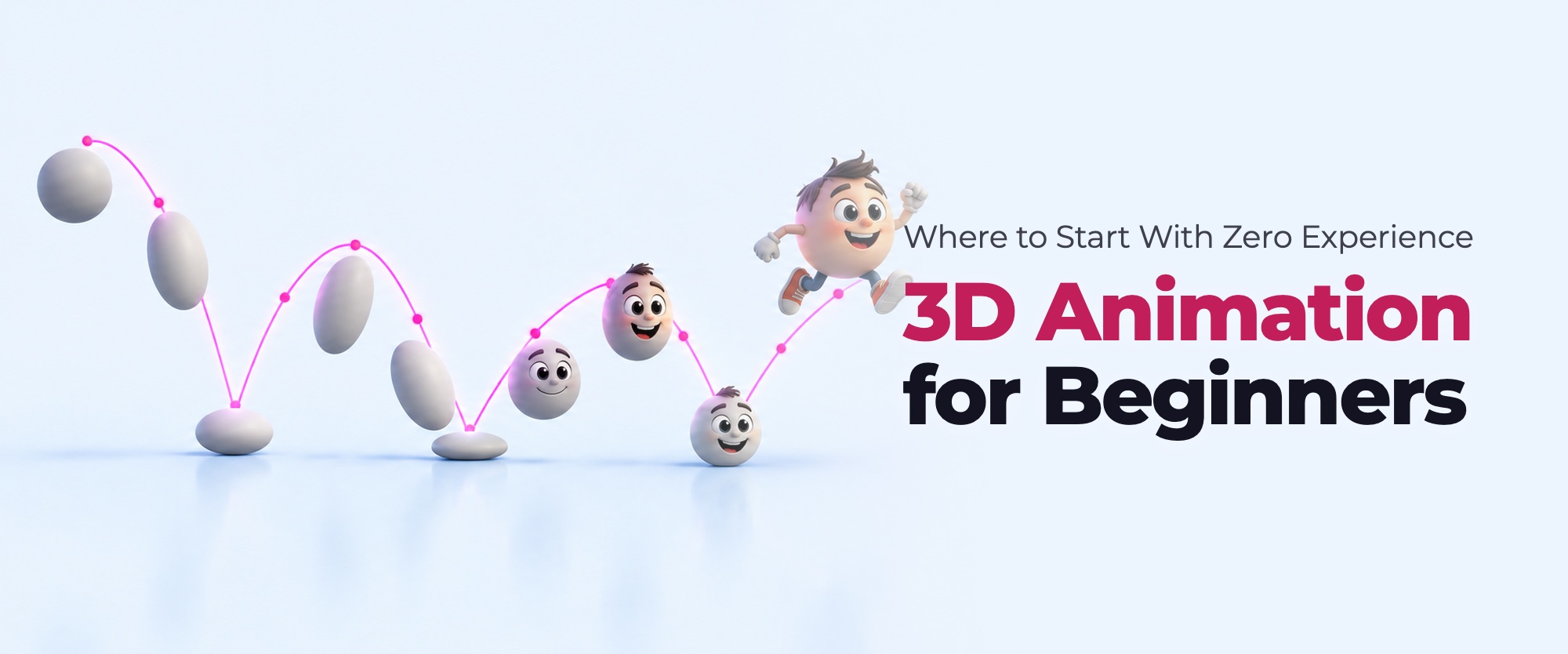
3D Animation Courses for Beginners: Where to Start With Zero Experience
Starting 3D animation courses for beginners with genuinely zero experience feels intimidating, but structured training is specifically designed to start from nothing and build up gradually. Many prospective students delay enrolling simply because they assume everyone else already knows the software. This guide explains exactly what a true beginner should expect in their first weeks, and how Rays VFX Academy’s studio-backed course is sequenced to avoid overwhelming students who have never touched 3D software before.
Key Takeaways
- Genuine beginner courses start with digital design fundamentals before introducing any 3D software at all.
- Zero prior experience is not a disadvantage in a properly sequenced course, since everyone starts from the same foundational stage.
- Confidence builds through small, achievable exercises rather than being thrown into complex character work immediately.
What Zero Experience Actually Means for a Beginner
Many students searching for 3D animation courses for beginners worry they are starting from further behind than they actually are. In reality, most applicants to structured courses have never used professional 3D software before, which means a well designed curriculum is built specifically around that starting point rather than assuming prior knowledge.
The bigger risk for true beginners is not lack of experience, but choosing a course that assumes some baseline familiarity and moves too quickly through fundamentals. This mismatch is what causes many beginners to feel lost and give up early, not any inherent difficulty in the subject itself.
It helps to remember that every working 3D artist, including instructors currently active in production, started exactly where a genuine beginner starts today. Animation as a skill set is learnable through structured, patient practice, not a talent some students simply have and others lack.
Parents researching this decision on behalf of a child often ask directly whether zero experience puts a student at a disadvantage compared with peers who may have dabbled in software before. In a properly sequenced course, this gap closes within the first few weeks, since the curriculum is built to bring every student to the same foundational level before introducing more demanding material.
Your First Steps: Digital Design Basics Before 3D Software
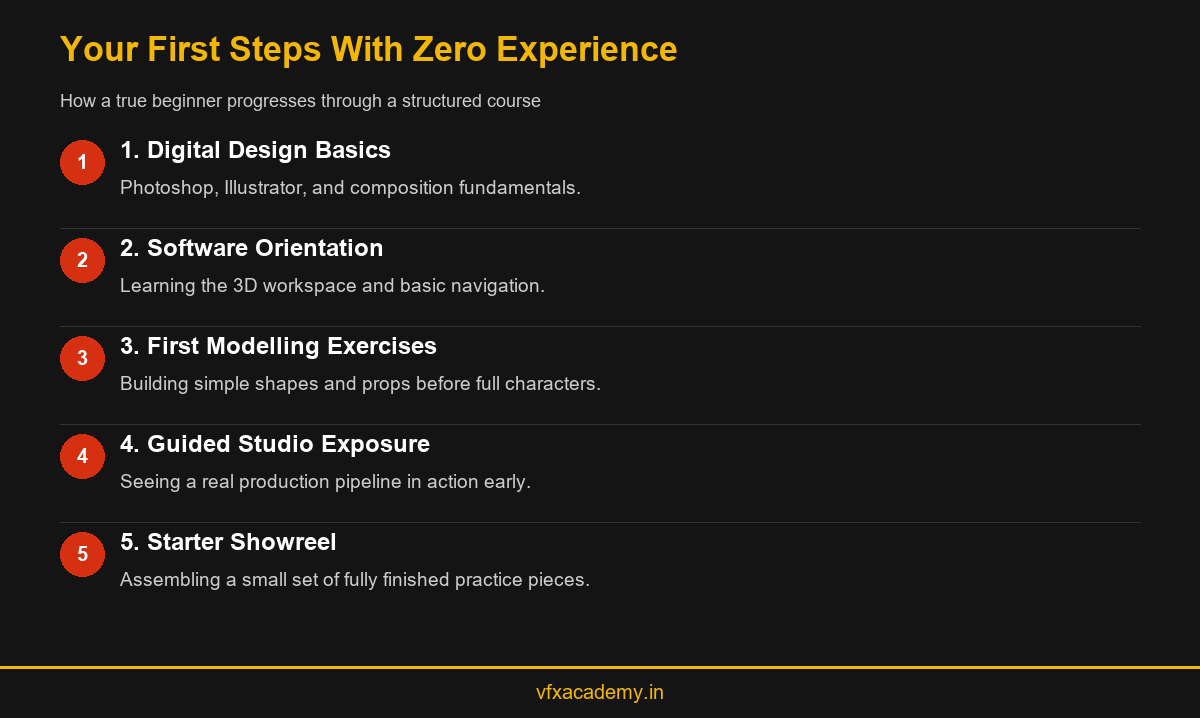
Properly sequenced 3D animation courses for beginners start with digital design fundamentals, Photoshop, Illustrator, and basic composition principles, before introducing any 3D specific software at all. This ordering matters because these fundamentals directly support the texture and concept work students will need once modelling begins.
Rays VFX Academy structures its early weeks around this exact principle, easing students into digital tools generally before layering on the added complexity of a three dimensional workspace. Students who skip this stage by rushing straight into complex software often find themselves overwhelmed by too many new concepts introduced simultaneously.
This gradual approach also gives instructors an early opportunity to identify which students need extra support before the workload increases in later weeks. Catching a struggling student during a relatively low-pressure digital design stage is far easier than trying to intervene once that same student is already behind during a technically demanding modelling or rigging assignment.
Students commonly ask how much daily practice time this early stage requires outside scheduled class hours. While this varies by individual, consistent short sessions, even thirty minutes a day, tend to build stronger habits than infrequent, longer sessions crammed in only before deadlines, since repetition matters more than raw hours logged for a true beginner still building basic muscle memory with new software.
First Modelling Exercises and Building Early Confidence
Once digital design basics are established, beginners move into simple modelling exercises using basic shapes before attempting anything resembling a full character. This staged approach lets students build genuine competence with core tools, like extrusion and basic transformations, before the added complexity of organic character shapes enters the picture.
Small, achievable wins matter enormously at this stage for keeping a true beginner motivated. Completing a simple, clean prop model provides tangible proof of progress that keeps momentum going into the more demanding rigging and animation stages that follow later in a structured course.
It also helps beginners to know that early mistakes are expected and genuinely useful. A model built with slightly messy topology in week two is not a sign of failure, it is a normal part of learning that a good instructor will correct calmly, using it as a teaching moment rather than treating it as evidence a student is struggling more than expected at this early stage.
Comparing progress with classmates can also work against a true beginner if done carelessly, since students arrive with different comfort levels around technology generally, regardless of 3D specific experience. A student who types quickly and navigates software menus confidently may appear to progress faster in week one, without this reflecting any real difference in eventual animation or modelling skill once the wider course has run its course.
Guided Studio Exposure for Complete Beginners
Studio-backed training offers a particular advantage for true beginners, since exposure to a real working environment, even at an early stage, demystifies what a professional 3D animation career actually looks like day to day. Rays VFX Academy’s connection to Rays3D means beginners are learning inside an environment shaped by 12+ years of actual production experience.
This exposure matters because many beginners hold unrealistic mental pictures of what studio work involves, either overestimating the glamour or underestimating the technical discipline required. Seeing a real pipeline in action early helps calibrate expectations honestly before a student has invested significant time in training.
Rays3D’s recognition, including a Kerala Government honour in 2015 and a Lumiere Award for Technology, also gives beginners and their families a concrete reference point when trying to judge whether the studio backing behind a beginner course is substantial or purely a marketing phrase used loosely across the industry.
Building Your Starter Showreel
By the later weeks of a structured beginner course, students begin assembling their first showreel from completed exercises, favouring a small number of fully finished pieces over a long list of incomplete attempts. This habit, prioritising completion over volume, is worth building from day one rather than learning as an afterthought closer to graduation.
For students who want to explore self-directed practice options recognised alongside formal vocational and diploma training standards in India, general context from bodies such as AICTE can be useful background reading, though prospective students should always verify any specific institute’s claims independently. Our 3D Computer Graphics Explained for Complete Beginners cluster and Learn VFX From Scratch guide both offer further beginner-focused reading for students at this exact stage of their research.
A starter showreel does not need to be long or impressive by professional standards. Its real purpose at this stage is demonstrating genuine, structured progress from zero prior experience, which matters far more to a hiring supervisor reviewing an early-career applicant than raw visual polish alone.
Conclusion
3D animation courses for beginners work best when they are genuinely sequenced for zero prior experience, starting with digital design basics before easing into modelling, rigging, and animation. Rays VFX Academy’s studio-backed course is structured around exactly this principle. Book a free demo class to see how a true beginner’s first weeks are actually taught before you enrol.
Frequently Asked Questions
Can a complete beginner really join a 3D animation course?
Yes. Structured courses are designed to start from zero prior experience, beginning with digital design fundamentals before introducing 3D software.
What should I expect in my first week of a 3D animation course?
Most structured courses start with digital design basics such as Photoshop and Illustrator before introducing any 3D modelling software.
Do I need to know how to draw to start 3D animation as a beginner?
No. Spatial reasoning and comfort with technical software matter more for 3D work than traditional drawing skill, which develops through structured practice.
How long before a beginner can build a simple 3D model independently?
Many structured courses get beginners building simple, clean models within the first few weeks, though confidence with complex character work takes longer.
Is Rays VFX Academy suitable for someone with zero prior experience?
Yes. The 6-month, 400-hour course is sequenced to start from digital design fundamentals, making it accessible to genuine beginners.
What is the biggest mistake beginners make when choosing a 3D animation course?
Choosing a course that assumes prior software familiarity and moves too quickly through fundamentals, which often causes early frustration and dropout.
Should beginners practice on free software before enrolling?
It can help build familiarity, though it is not required. Structured courses are designed to work with students who have never touched 3D software before.
Where can I learn more about starting a VFX career as a beginner?
See Top VFX Training Institute for Complete Beginners for a wider beginner-focused comparison of institute options.

You may also like
Best 6-Month VFX and Animation Diploma, Explained