Animation Diploma Course: Structure, Subjects, and Outcomes
Understanding how an animation diploma course is actually structured matters more than reading a single line course description. This guide walks through the stages, subjects, and expected outcomes of the animation diploma course at Rays VFX Academy, so prospective students know what a typical week looks like and what they should be able to do by the time the 6 months are over.
- The animation diploma course moves through 4 broad stages, from design foundations to VFX specific compositing, across 6 months and 400 hours.
- Subjects are sequenced so each stage builds on the last, rather than teaching software in isolation.
- Outcomes are measured by the range of entry level roles a graduate can apply for, not by a single certificate alone.
How the Animation Diploma Course Is Structured
The animation diploma course at Rays VFX Academy runs across 6 months and 400 hours, divided into stages rather than a flat list of unrelated classes. This structure exists because skills in this field build on each other. A student who has not practised basic editing struggles more with pacing once they reach compositing, so the course sequence is designed to prevent that gap from forming in the first place.
For a broader view of how this course fits into the full diploma in animation and vfx offering, including eligibility after 10th or after 12th, see the main pillar guide. This article focuses specifically on what happens once a student is enrolled and moving through the curriculum week by week.
Because the course runs in fixed batches rather than as self paced online lessons, every student in a batch reaches each stage together. This matters for an animation diploma course specifically, since group critique and peer comparison are part of how design and animation skills improve. A student working alone on tutorials rarely gets the same quality of feedback that a structured batch, reviewed by instructors active in real Rays3D production work, can provide.
Batch sizes and start dates vary by intake, and Kochi based students often join alongside students who have relocated from elsewhere in Kerala for the duration of the course. This mix of local and non local students tends to reflect the wider draw of a studio connected animation diploma course, where the reason to join is less about geography and more about wanting studio informed training that a purely local, classroom only option nearby may not offer.
Subjects Covered Stage by Stage
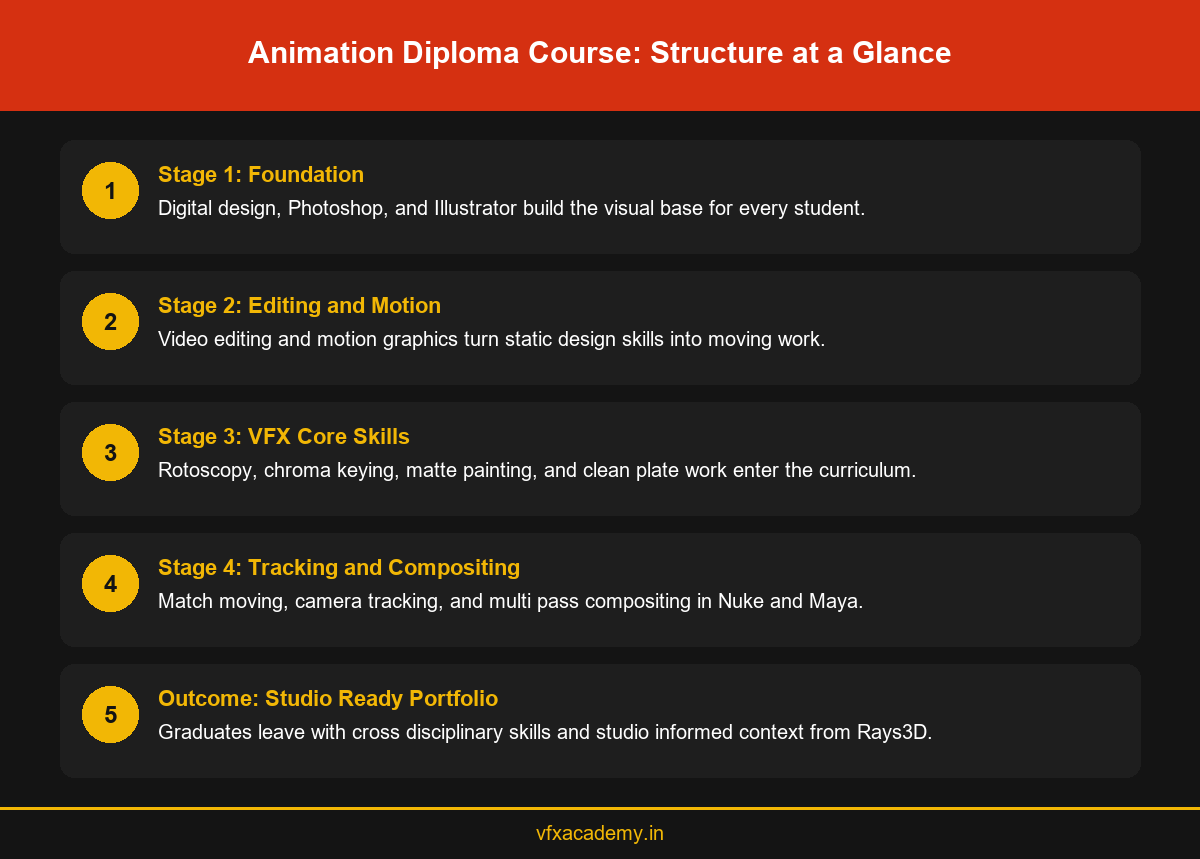
The first stage covers digital design fundamentals, Photoshop, and Illustrator, giving every student a shared visual design vocabulary regardless of their starting point. The second stage moves into video editing and motion graphics, where students begin working with timing, pacing, and movement rather than static images.
From there, subjects shift toward VFX specific training: rotoscopy, chroma keying, matte painting, clean plate and wire removal, match moving, and camera tracking. The final stage brings everything together through multi pass compositing using Nuke, with Maya Nuke integration and an introduction to the stereoscopic pipeline. Students who want the full module by module breakdown can read Diploma in Animation and Multimedia: Full Course Guide.
Each subject is taught with a specific downstream use in mind rather than as an isolated skill to memorise. Rotoscopy, for instance, is introduced not as a standalone exercise but as preparation for later compositing work, where a poorly cut roto matte becomes an obvious problem. This connective approach across subjects is one of the more practical differences between a structured animation diploma course and a set of unrelated weekend workshops covering similar software without the same sequencing logic behind them.
Assessment throughout the course tends to be practical rather than purely written. Students are expected to produce actual shots, edits, and composited sequences at each stage, which means progress is visible in a growing portfolio rather than only in test scores. This is closer to how a working studio evaluates talent than how a traditional academic diploma is typically graded.
What Outcomes to Expect After 6 Months
By the end of the animation diploma course, graduates should be able to build a small portfolio spanning design, motion graphics, and at least one specific VFX skill, such as rotoscopy or compositing, well enough to show a prospective employer. This range is the outcome the course is actually built around, rather than a single flashy showreel piece.
Because training happens inside a studio connected to Rays3D, outcomes are also shaped by exposure to real production standards rather than only academic grading. That distinction matters when comparing this diploma in animation course against options where feedback comes only from an instructor who has never worked on a commercial production themselves.
It is worth being specific about what this diploma does not promise. Completing the animation diploma course does not guarantee a job offer, and Rays VFX Academy does not present it that way. What it does provide is a demonstrable, portfolio backed range of skills and studio informed context, which is the outcome most entry level VFX and animation hiring actually screens for during interviews and portfolio reviews.
How This Course Compares to Similar Options
Students often compare this animation diploma course against shorter certificate options or against a pure 3D animation track. The dual coverage of animation and VFX skills is the key difference, explained in more depth in 3D Animation and VFX Courses Combined: Is a Dual Skill Diploma Worth It.
For students who are specifically weighing timing options, such as a shorter intensive course versus the standard 6 month format, Best 6 Month VFX and Animation Diploma, Explained breaks down why the pacing is set the way it is rather than compressed further.
Students comparing this course against a purely 3D animation focused diploma should also weigh how much of their intended career depends on post production skills versus modelling and rigging alone. A compositor, roto artist, or matchmove artist role draws directly on the VFX modules covered in this animation diploma course, while a pure animation track leans harder on movement and character work without the same depth in post production finishing.
Fees, Certification, and Next Steps
Rays VFX Academy does not publish one fixed fee figure for the animation diploma course, since scholarship based and zero upfront fee paths vary by batch and student profile. For a scholarship focused breakdown, see Which VFX Course Offers Scholarship Based Fees, and confirm exact numbers directly through a free demo class.
The course is positioned around AIS and Hollywood associated certification alongside the structured outcomes described above. Understanding the wider recognised vocational training landscape in India can help set realistic expectations about what any diploma certificate does and does not guarantee on its own, which is why verifying claims directly with the academy matters more than relying on a listing summary.
The most reliable way to plan your next step is to attend a free demo class, where you can see the studio, meet current instructors, and ask about batch timing for the specific stage of the animation diploma course you are most curious about. This also gives the academy a chance to confirm your entry point, whether after 10th, after 12th, or as a career change, before discussing fee options in detail.
Bring any specific questions about the animation diploma course structure to that first visit, including how the stages are graded, what a typical weekly schedule looks like, and how much flexibility exists if a particular subject needs more practice time than the standard pace allows for your batch.
Conclusion
An animation diploma course is only as useful as its structure, and Rays VFX Academy’s version is built stage by stage so that each subject supports the next rather than sitting in isolation. If this structured approach and studio backed context sound right for you, book a free demo class in Kochi to see the stages in person and ask outcome and fee questions specific to your goals.
People Also Ask
How is the animation diploma course structured at Rays VFX Academy?
It moves through 4 broad stages: design foundations, editing and motion graphics, VFX core skills such as rotoscopy, and finally compositing. The sequence runs across 6 months and 400 hours inside a studio connected to Rays3D.
What subjects are taught in this animation diploma course?
Subjects include digital design, Photoshop, Illustrator, video editing, motion graphics, rotoscopy, chroma keying, matte painting, match moving, camera tracking, and multi pass compositing using Nuke and Maya Nuke integration together.
What can I do after finishing an animation diploma course?
Graduates typically apply for entry level roles such as junior compositor, roto artist, motion graphics artist, or video editor. See VFX career opportunities for a broader view of common post diploma roles across studios.
Is the animation diploma course only for students after 12th?
No. Students can join after 10th or after 12th, and career changers and self taught creatives also enrol regularly. The stages remain the same, though pacing in early modules can vary by entry point.
Does the animation diploma course include studio exposure?
Yes. Because Rays VFX Academy evolved from Rays3D, a working production studio, later stages of the course include exposure to real production context rather than classroom only instruction, which sets it apart from purely academic programs.
How much does the animation diploma course cost?
There is no single published figure. Fees depend on scholarship eligibility and whether a zero upfront fee path is chosen, so the accurate way to get a number is to enquire directly through a free demo class.
Can self taught video editors skip the early stages of the course?
Self taught students with existing editing skills often move faster through the first stage, though the full sequence is generally recommended so no foundational gaps carry into the VFX specific stages later on.
Where can I compare this course with other formats?
Visit the blog index for comparisons covering dual skill diplomas, career change pathways, and beginner focused institute guides related to the animation diploma course and its studio backed structure.

You may also like
Best 6-Month VFX and Animation Diploma, Explained